The Evolution of the Trench: Why the Leica Piper 100 Became the UK’s Unofficial Site Standard
Built for the Reality of the British Site
Simon Lunt (PQS): Mark, what was the original problem Leica set out to solve with this design?
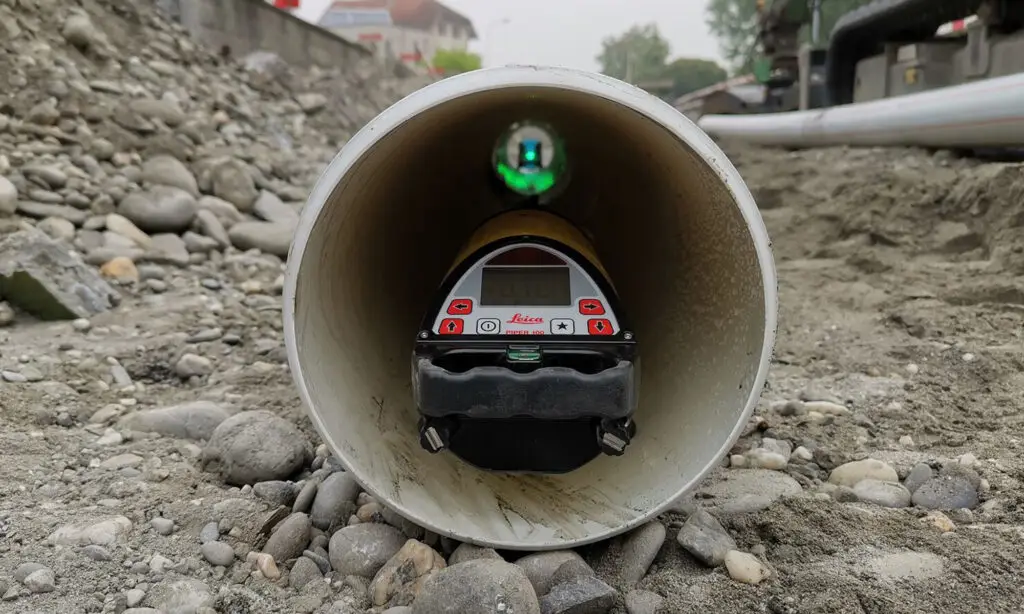
Mark Laud (Leica): “The story of the Piper is about listening to workers in the trench. Old pipe lasers were bulky and delicate. We created a compact, virtually indestructible tool using cast aluminium. It fits 100mm (4-inch) pipes and survives the wet reality of a British trench”.
The “Set and Forget” Philosophy
Simon: PQS customers mention they don’t have to ‘babysit’ the Piper. Why is it so user-friendly?
Mark Laud: “We designed the Piper for simplicity. If a tool is too complex, it won’t be used correctly. Our Automatic Grade Compensation feature identifies movement from vibrations or shifty ground and re-levels itself. If the beam is on the target, the pipe is right”.
A Tool That Outlasts the Project
Mark Laud: “There is a sense of heritage with the Piper 100. Managers often use the same laser for over a decade. While it is built like a tank, it is still a precision instrument. Annual calibration ensures these daily workhorses remain accurate for the long haul”.
The Piper 100: At a Glance
Compact Power: Specifically designed to fit inside 100mm (4-inch) pipes.
Highly Visible: The signature yellow housing is easy to spot in dark or muddy conditions.
The Big Display: Easy-to-read grade and alignment figures, even in low light.
Waterproof: IPX8 rated, meaning it can handle total submersion.
Battery Life: 40 hours of continuous use on a single charge.
The Leica Piper 100 didn’t become a favourite through flashy marketing. It succeeded by being the most reliable tool on site. It ensures that when the trench is backfilled, the job is done right the first time.
At PQS Survey, we recommend the Piper 100 for anyone seeking precision in the ground. Whether you are hiring or investing, you are getting thirty years of site-proven history backed up by trained PQS service technicians.