
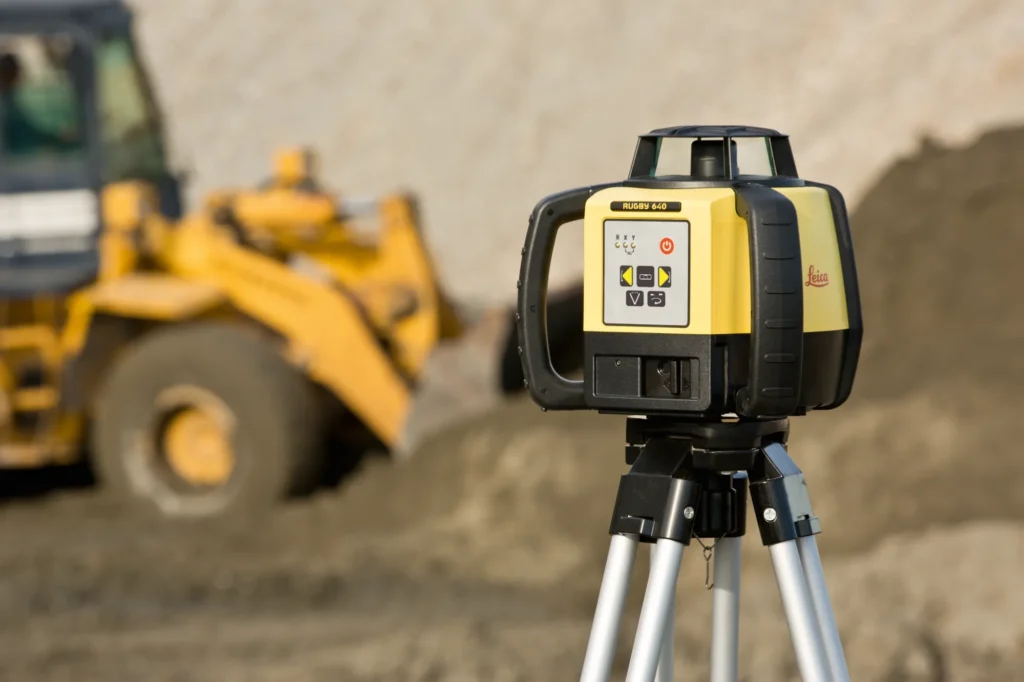
Laser levels are the unsung heroes of modern construction and surveying. When they’re spot on, everything lines up beautifully. When they’re not… well, that’s when small errors quietly turn into expensive problems.
The tricky part? A laser level can look perfectly fine while being wildly inaccurate.
Here are the key warning signs that your laser level may be out of calibration — and why ignoring them is a gamble you don’t want to take.
1. Your Measurements Don’t Match Previous Results
If you’re setting out work that should match earlier measurements but suddenly doesn’t, that’s a red flag.
Consistent discrepancies — even small ones — often point to calibration drift. Over time, knocks, vibration, transport, or general wear can shift internal components just enough to throw readings off.
If you’re double-checking more than usual or second-guessing your own numbers, trust your instincts.
2. The Laser Line Looks Off (Even Slightly)
A laser line should be crisp, straight, and stable.
If you notice:
- A line that appears curved or uneven
- A beam that wobbles or drifts
- A line that changes position when the unit is rotated
…it’s very likely your calibration is no longer accurate.
Even millimetres matter when you’re setting levels, gradients, or machine control — and the laser won’t tell you it’s wrong. It’ll confidently give you bad data.
3. Levelling Takes Longer Than It Should
Laser levels are designed to make life easier, not harder.
If you find yourself:
- Repeating setups
- Re-levelling constantly
- Adjusting things that used to be quick
that’s often a sign the compensator or internal levelling system isn’t behaving as it should — another classic calibration issue.
4. Results Vary Depending on Distance
A properly calibrated laser level should be accurate across its working range.
If it’s fine up close but noticeably off at longer distances, calibration drift is a common cause. This is especially risky on large sites where errors compound quickly.
In short: if accuracy drops the further you go, something’s not right.
5. It’s Been Dropped, Knocked, or Lived a Hard Life
Let’s be honest — site equipment takes a beating.
If your laser level has:
- Been dropped (even once)
- Taken a knock during transport
- Lived in the back of a van for years
- Been exposed to harsh site conditions
…there’s a strong chance calibration has been affected.
Damage doesn’t have to be obvious to cause accuracy issues.
6. It Hasn’t Been Calibrated in a Long Time (or Ever)
This one’s simple.
If you can’t remember the last time your laser level was calibrated — or it’s never been checked — then it’s overdue.
Regular calibration:
- Protects accuracy
- Reduces rework
- Prevents costly mistakes
- Keeps you compliant with quality standards
Think of it like servicing a vehicle: skipping it doesn’t save money — it just delays the bill.
Why Calibration Really Matters
An out-of-calibration laser level can lead to:
- Incorrect levels and falls
- Misaligned structures
- Failed inspections
- Rework, delays, and extra costs
And the worst part? You often don’t realise until it’s too late.
How PQS Survey Can Help
At PQS Survey, we provide professional laser level calibration services to ensure your equipment is delivering the accuracy your site depends on.
Our calibration checks:
- Confirm your equipment meets manufacturer tolerances
- Identify hidden issues before they cause problems
- Give you confidence that your measurements are correct
If something’s off, we’ll tell you — straight and simple.
In Summary
If your laser level is:
- Giving inconsistent readings
- Taking longer to set up
- Acting differently than it used to
- Or hasn’t been calibrated in a long time
…it’s time to get it checked.
Accuracy isn’t optional — it’s the foundation of everything you build.
📞 Get in touch with PQS Survey today to book your laser level calibration and keep your site running smoothly.


